
How the APR AGV Is Transforming Third-Party Logistics Operations Across Europe

Third-party logistics (3PL) providers in Europe are operating in an increasingly demanding environment. Client expectations are rising, SKU counts are growing, labour markets are tightening, and margins remain under continuous pressure. For 3PL operators managing multiple client contracts under a single roof, finding operational leverage is not a luxury — it is a strategic necessity.
The APR, an Automated Guided Vehicle (AGV) developed by Tuskrobots, is purpose-built for exactly this kind of high-stakes, high-complexity logistics environment. This article explores how 3PL operators across Europe are deploying the APR to automate internal transport, reduce dependency on manual labour, and build a more scalable and resilient warehouse operation.
The Pressure Facing 3PL Providers in Europe Today
Rising Labour Costs and Workforce Shortages
Across Western and Central Europe, warehouse labour costs have risen substantially over the past several years. In markets such as the Netherlands, Germany, Belgium, and Poland, logistics operators are competing for a shrinking pool of warehouse workers. Staff turnover rates in fulfilment and distribution centres are among the highest of any industry, creating constant recruitment, onboarding, and training overhead.
For 3PL providers, these costs are compounded by the fact that client contracts are often fixed or capped — meaning margin erosion hits directly at the bottom line when labour costs increase.
Demand Volatility and Multi-Client Complexity
Unlike dedicated warehouses, 3PL facilities handle goods for multiple clients simultaneously, often with different product categories, handling requirements, and throughput profiles. Peak seasons, promotional campaigns, and last-minute volume spikes create unpredictable demand patterns that are difficult to staff for efficiently.
Automation — particularly in the form of AGVs — offers 3PL operators a way to absorb this variability without proportionally increasing headcount.
What Is an AGV — and Why the APR Is Built for 3PL Environments
An Automated Guided Vehicle (AGV) is an industrial robot that transports goods, pallets, or materials within a facility along defined or dynamically calculated routes. Unlike manually operated forklifts or trolleys, AGVs operate autonomously, following navigation logic that allows them to move continuously and reliably without direct human involvement.
Tuskrobots' APR is an AGV designed for the real-world conditions of modern European logistics facilities: mixed warehouse layouts, shared human-robot working environments, and the need for reliable, round-the-clock internal transport.
How the APR AGV Operates in a 3PL Warehouse
The APR handles the repetitive, high-volume transport tasks that consume a significant portion of a warehouse worker's time — moving pallets between receiving docks and storage zones, shuttling goods to picking areas, and clearing staging lanes for outbound dispatch. Once deployed, the APR operates continuously across shifts, including during periods when human activity is reduced.
Because it is an AGV — not a manually operated vehicle — the APR brings consistency and predictability to transport operations. It doesn't slow down at the end of a shift, doesn't require a driver, and doesn't require breaks.
AGV vs. Manual Transport: A Practical Comparison
| Factor | Manual Forklift / Trolley | APR AGV |
|---|---|---|
| Operating hours | Limited by shift patterns | Continuous (24/7 capable) |
| Labour dependency | High | Minimal |
| Consistency | Variable | Consistent |
| Safety incidents | Higher risk | Lower risk (sensor-based) |
| Scalability | Hire more people | Deploy additional units |
| Cost profile | Rising (labour inflation) | Fixed after deployment |
For 3PL operators running multi-shift operations, the AGV model offers a fundamentally more stable cost structure.
Key Use Cases for the APR in Third-Party Logistics
3PL warehouses contain a wide range of internal transport flows. The APR is well-suited to a number of these high-volume, repetitive tasks.
Pallet and Goods Transport Between Zones
One of the most time-consuming activities in any logistics facility is moving pallets from one area to another — from goods-in to storage, from storage to picking, or from picking to dispatch staging. These moves are often short, frequent, and predictable in nature, making them ideal candidates for AGV automation.
The APR can be tasked with these transport missions continuously, freeing warehouse staff to focus on value-added activities such as picking, packing, quality control, and client-specific handling.
Inbound and Outbound Staging
At goods-in, pallets arriving from suppliers or transport partners need to be cleared from the receiving dock and moved to holding or storage positions. Delays here create bottlenecks that ripple through the entire facility. The APR can operate in the goods-in area to clear incoming loads efficiently, reducing congestion and improving dock turnaround times.
At goods-out, the APR can move picked and packed goods to dispatch staging areas, ensuring outbound lanes are loaded consistently and on schedule.
Replenishment and Buffer Zone Management
In facilities with separate bulk storage and active pick faces, replenishment — moving stock from bulk positions to pick lanes — is a continuous and labour-intensive task. The APR can take over replenishment transport, ensuring pick faces remain stocked without requiring dedicated replenishment staff.
In multi-client 3PL environments, buffer zone management between different client areas can also be automated using the APR, reducing cross-traffic and improving zonal organisation.
Integrating the APR AGV with Your Existing WMS and ERP
One of the most common concerns among 3PL operators evaluating AGV solutions is integration: will the AGV work with the Warehouse Management System (WMS) already in place?
The APR is designed to integrate with existing WMS and ERP platforms via standard interfaces. This means the AGV receives transport tasks directly from your operational systems, rather than requiring a parallel or manual dispatch process. The result is a tightly coupled automation layer that responds to the same operational logic already governing your facility.
For 3PL operators managing multiple client configurations within a single WMS, this integration capability is critical. The APR can be directed to serve different client zones, handle different product types, and prioritise transport missions according to the rules already embedded in your system — without requiring a warehouse redesign.
Tuskrobots' integration team works closely with 3PL operators during deployment to ensure the APR fits into existing workflows with minimal disruption.
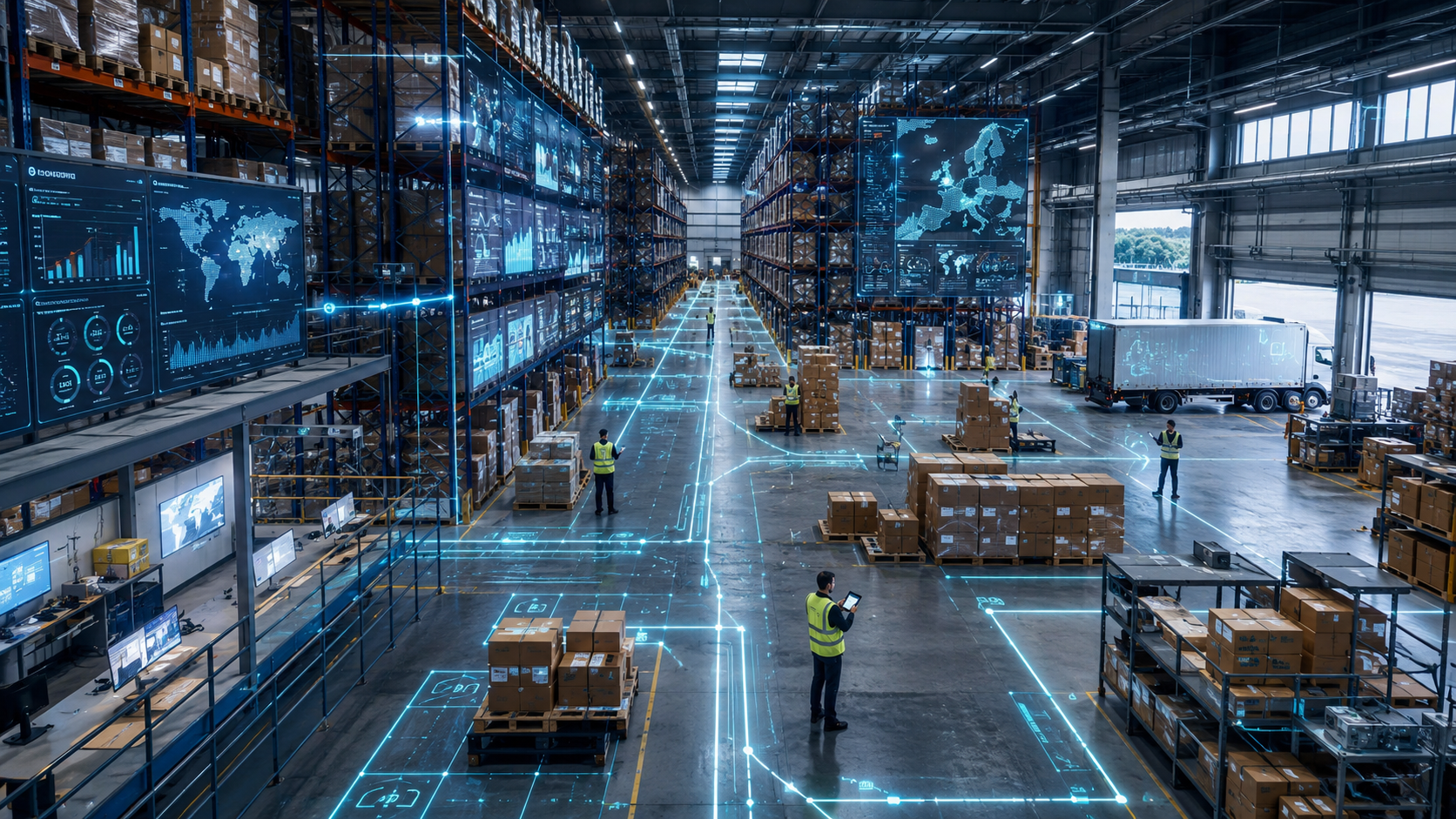
Scalability: Starting Small, Growing with Demand
A common barrier to AGV adoption among 3PL providers is the perception that automation requires a large upfront commitment — both in terms of capital and operational disruption. In practice, the APR model supports a more measured approach.
Many 3PL operators begin with a focused deployment in a single area of the facility — goods-in, replenishment, or a specific client zone — and expand the AGV fleet as operational confidence grows and ROI is demonstrated. Because the APR operates within the existing facility layout and integrates with the existing WMS, additional units can be added without a major infrastructure overhaul.
This scalability model is particularly well-suited to the 3PL context, where client contracts can be won, expanded, or terminated over time. A scalable AGV fleet means automation investment can grow in line with business volume — and can be redeployed within the facility as client configurations change.
For 3PL operators facing tender cycles where automation credentials are increasingly a differentiating factor, having a proven and expandable AGV deployment is also a competitive advantage in contract negotiations.
→ Explore Industrial Automation Solutions for a broader view of automation pathways.
Safety and Compliance in European 3PL Facilities
Safety is a non-negotiable requirement in European industrial and logistics operations. AGVs operate in shared environments alongside warehouse staff, and their deployment must meet the applicable European safety standards and machinery directives.
The APR is designed with safety as a core operational principle. It uses sensor-based navigation and obstacle detection to operate safely in dynamic warehouse environments where pedestrian traffic, forklifts, and changing floor conditions are everyday realities.
For 3PL facilities operating under ISO 45001 health and safety frameworks, or subject to customer audits with safety criteria, the APR's predictable and controlled movement pattern reduces the risk of accidents associated with manual forklift operations — one of the most common sources of serious injuries in warehouse environments.
The APR's safety architecture is aligned with relevant European machinery and workplace safety regulations, supporting 3PL operators in meeting their duty-of-care obligations while also reducing incident-related costs and downtime.
ROI and Business Case for 3PL Operators
The business case for AGV deployment in a 3PL environment is typically built around three drivers:
Labour cost reduction: The APR replaces or reduces the need for manual internal transport roles. In markets where warehouse wages are rising and turnover is high, this represents a direct and growing saving. A single AGV operating across two or three shifts can replace the equivalent of multiple full-time transport roles.
Operational continuity: Unlike human workers, the APR does not call in sick, does not slow down during night shifts, and does not require overtime pay during peak periods. For 3PL operators with SLA commitments to clients, this consistency reduces the risk of service failures caused by staffing issues.
Throughput improvement: By removing bottlenecks in internal transport — particularly in goods-in, replenishment, and staging — the APR can improve overall facility throughput without increasing headcount. In 3PL contexts where additional volume may be absorbed from existing clients or won through new contracts, this capacity headroom has direct commercial value.
Typical payback periods for AGV deployments vary depending on facility size, operational patterns, and labour market conditions — but for 3PL operators in high-wage European markets running multi-shift operations, the financial case is increasingly compelling.