
Pharmaceutical Industry
Pharmaceutical manufacturing combines strict GMP requirements with complex process steps, specialised carriers and demanding contamination control. To reduce manual handling and connect isolated equipment, the customer needed reliable automation across formulation, infusion and sterilisation processes.
Project outcomes
Results at a Glance
The challenge
Connecting Complex Material Flow in Pharmaceutical Production
A listed pharmaceutical group with more than 20 research competence centres worldwide and 11 manufacturing sites across China needed to automate material movement between formulation, infusion and repeated sterilisation steps. Shaped carriers, disconnected equipment and manual workflows created information silos and made consistent GMP-oriented operation difficult.
Manual-dominated material flow
Disconnected process equipment
Non-standard shaped carriers
The solution
Connected Automation for Specialised Pharmaceutical Carriers
On-board terminals coordinate robot operation between each process
Wireless control connects equipment into one automated workflow
A shaped-pallet algorithm recognises and adapts to different carrier forms
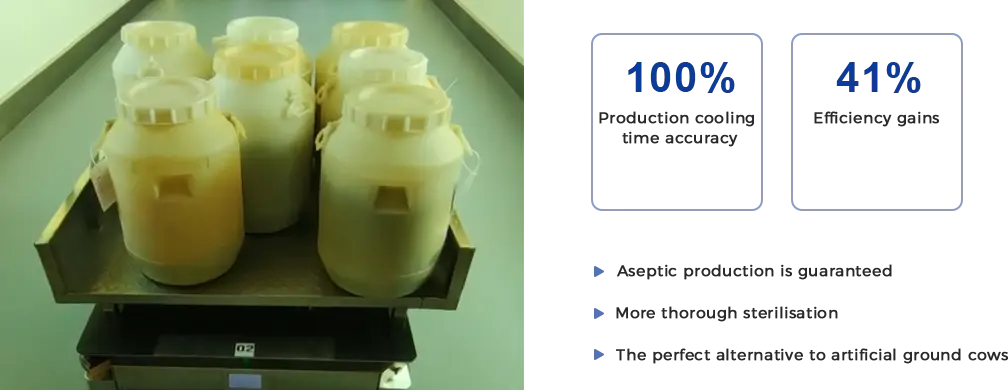
Project impact
Aseptic, Repeatable and More Efficient Production Flow
- Accurate production cooling times support repeatable process control
- Automated transport helps protect aseptic production conditions
- Connected equipment enables more thorough and consistent sterilisation
- Robots replace repetitive manual transfers between isolated process steps
Tuskrobots Europe
Making handling simpler and more efficient.
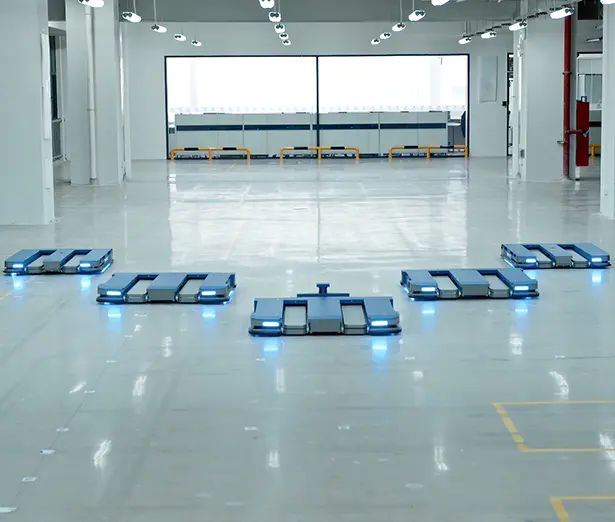
As a manufacturer of intelligent pallet-handling robots, Tuskrobots empowers smart factories with simpler, more efficient and adaptable material flow.
Adaptable by design
Our robots are designed around international standard pallets for reliable conveying and picking across different operating scenarios.
Customer value first
Project delivery and after-sales capabilities are continuously improved through real customer feedback and operational experience.
Service built around you
Configurable products, systems and service plans help match each solution to specific operating scenarios and customer requirements.
Industry knowledge
Practical Insights for Pharmaceutical Manufacturing
Learn how connected pallet-handling robots support GMP-oriented, traceable and contamination-conscious material flow in pharmaceutical production.
What Is a Pharmaceutical Pallet-Handling Robot?
A pharmaceutical pallet-handling robot is an autonomous system designed to move raw ingredients, finished products, packaging materials and specialised carriers between defined points in a manufacturing facility.
Sensors, navigation software and process interfaces allow the robot to identify assigned loads, avoid obstacles and complete repeatable transfers without continuous manual intervention. It can support tasks such as vehicle loading, internal transport, stacking, de-stacking and delivery to conveyors or production stations.
In regulated pharmaceutical environments, this automation improves consistency and safety while supporting traceable workflows and reducing unnecessary human contact with materials.
How Pallet-Handling Robots Improve Pharmaceutical Supply Chains
Pharmaceutical supply chains depend on reliable handling, accurate product identification and strict process control. Pallet-handling robots improve these operations in several ways:
- Lower labour demand: Robots automate repetitive loading, unloading, transport and stacking tasks that would otherwise require manual work.
- Higher process efficiency: Consistent vehicle movement shortens internal transport times and helps materials reach each production step on schedule.
- Improved safety: Automated vehicles can operate in cold storage, sterilisation zones and other demanding environments while reducing employee exposure.
- Fewer handling errors: Accurate pickup and placement help ensure that the correct products and carriers reach the correct destination.
- Enhanced traceability: Sensors and system data make material movements easier to track throughout manufacturing and distribution.
Together, these capabilities help pharmaceutical manufacturers protect quality, improve delivery performance and maintain better control of regulated material flows.
Reducing Costs While Strengthening Manufacturing Quality
The strongest results come when autonomous transport is connected directly with production equipment and process data. This creates several operational advantages:
- Connected process control: Wireless interfaces link previously isolated devices and coordinate transport between production steps.
- Consistent timing: Automated task execution supports repeatable cooling, sterilisation and handover intervals.
- Accurate carrier handling: Adaptive algorithms recognise shaped pallets and enable reliable pickup and placement.
- Reduced rework: Precise, repeatable transport lowers the risk of incorrect transfers and avoidable process interruptions.
- Less wasted capacity: Better stacking, routing and task sequencing improve the use of vehicles, carriers and production space.
- Safer aseptic workflows: Reduced manual contact supports cleaner production and more controlled material movement.
The result is a connected material-handling process that reduces operating cost while strengthening repeatability, traceability and product quality.
Your operation could be next
Ready to improve pharmaceutical material flow?
Let’s explore how connected pallet handling can reduce manual work, link isolated processes and support safer, more traceable production across your facility.